

 English
 中文简体
中文简体 عربى
عربى
Cómo convertir aceite perfumado en spray en casa: proporciones, pasos y embotellado
Noticias de la industria-Contenido
- 1 Conclusión: lo que realmente implica convertir el aceite perfumado en spray
- 2 ¿Por qué convertir el aceite perfumado en spray? Las verdaderas compensaciones
- 3 Lista de verificación de ingredientes y equipos para un lote de 50 ml
- 4 Las proporciones adecuadas: de Extrait a Body Mist
- 5 Paso a paso: del aceite al spray embotellado
- 6 Botellas y bombas: qué encaja, qué funciona, qué arruina un lote
- 7 Siete errores comunes y cómo solucionarlos
- 8 Almacenamiento, vida útil e higiene del recambio
- 9 Preguntas frecuentes
- 9.1 1. ¿Puedo utilizar vodka en lugar de alcohol de perfumista?
- 9.2 2. ¿Cuánto aceite perfumado debo añadir a una botella pulverizadora de 100 ml?
- 9.3 3. ¿Por qué mi spray se volvió turbio?
- 9.4 4. ¿Puedo agregar agua para rociar perfume?
- 9.5 5. ¿La versión en spray durará tanto como el aceite original?
- 9.6 6. ¿Qué bomba necesito para un frasco de perfume recargable de 10 ml?
- 9.7 7. ¿Cuánto tiempo tengo para envejecer la mezcla?
Conclusión: lo que realmente implica convertir el aceite perfumado en spray
tomar 1 parte de concentrado de aceite de perfume y 4 partes de alcohol de perfumista por volumen, lo que te da aproximadamente un 20% de Eau de Parfum. Selle la mezcla en una botella de vidrio limpia, agítela y déjela madurar durante 2 a 4 semanas a temperatura ambiente lejos de la luz directa. Después del envejecimiento, pase el líquido a través de un filtro de café para eliminar los sedimentos y luego decántelo en un frasco de perfume de vidrio equipado con una bomba de niebla fina. Esa es toda la conversión en un párrafo.
La única advertencia que lo cambia todo es el material de partida. Un aceite de perfume concentrado, a veces denominado aceite de perfume o attar, se disuelve limpiamente en alcohol. Pero muchos perfumes roller que se venden a los fanáticos de las fragancias independientes ya contienen un aceite portador como el de jojoba o el de coco fraccionado. Los aceites portadores no se disuelven en alcohol. Si fuerza esa mezcla a través de una bomba de niebla fina, obtendrá un líquido turbio y una boquilla que se obstruirá en unos días. Para esos aceites, una bomba de loción o un atomizador de orificio ancho es la solución honesta.
La segunda causa más común de falla es el cuello de la botella, no la fórmula. Una bomba construida para una rosca 13-410 no sellará en una botella 18-410, y una bomba de engarzado necesita un cuello de engarce correspondiente. Mida el diámetro interior y la rosca de su botella antes de realizar el pedido y trate la bomba y la botella como una unidad compatible.
¿Por qué convertir el aceite perfumado en spray? Las verdaderas compensaciones
El aceite perfumado y el perfume en aerosol son dos sistemas de administración del mismo líquido. El aceite se deposita sobre la piel, recorre una distancia corta y se irradia lentamente. Un spray atomiza el aroma en finas gotas que se calientan rápidamente y llegan al aire más rápido. Esa diferencia explica por qué tantas personas que aman los aceites independientes prefieren los aerosoles: el aroma se abre a tu alrededor en lugar de permanecer pegado a tus muñecas.
Los beneficios prácticos de convertir el petróleo en spray son claros:
- Mejor proyección y estela — las gotas atomizadas llegan al aire y se extienden mucho más lejos que una película aceitosa.
- Aplicación más limpia — sin residuos aceitosos en cuellos, puños o manos.
- Dosis controlada — cada pulsación de una bomba de 0,10 ml administra una dosis predecible, a diferencia de arrastrar una bola dos o tres veces.
- Eficiencia de costes — Usted mismo diluye el concentrado, por lo que una pequeña cantidad de aceite se convierte en una botella utilizable mucho más grande.
También hay compensaciones honestas. El alcohol cambia la apertura del aroma: las notas altas cítricas y florales se sienten más brillantes, pero la misma concentración en un aerosol puede parecer de menor duración sobre la piel desnuda. La longevidad se comporta de manera diferente porque la masa del aerosol se calienta rápidamente y se evapora, mientras que una pequeña cantidad de aceite permanece en su lugar y se sigue liberando de la piel. Y si diluye un aceite que ya contiene aceite portador, es posible que el producto final nunca se vuelva transparente y no se comporte como una clásica niebla de perfume transparente.
Lista de verificación de ingredientes y equipos para un lote de 50 ml
Antes de medir algo, recopile todo lo que está en esta lista. El fallo más común del bricolaje no es un aceite malo: es una sustitución de último momento, como agua del grifo o un vaso de plástico reutilizado, y esas pequeñas opciones se muestran claramente en el spray terminado.
| Artículo | Rol | Detalle que importa |
|---|---|---|
| Concentrado de aceite perfumado | Proporciona la fragancia | Utilice aceite de perfume puro; las mezclas roll-on con aceite portador permanecerán turbias |
| Alcohol de perfumista (SD Alcohol 40-B) | Disuelve el aceite y elimina el aroma de la piel. | El alcohol de grano de 190 grados es el sustituto casero habitual |
| Agua destilada (opcional) | Suaviza la niebla y redondea la sensación de alcohol. | Mantener entre el 2% y el 5%, nunca más del 10% del lote total. |
| Glicerina o dipropilenglicol (opcional) | Fijador que retarda la evaporación. | 1-2% es suficiente; más hace que el spray se sienta pegajoso |
| Vaso de cristal con marcas. | Medición precisa en ml | El plástico no es seguro con alcohol de alta graduación. |
| Frasco de vidrio ámbar con tapón hermético. | Envejecimiento hermético sin exposición a la luz. | El espacio de cabeza por debajo del 5 % limita la oxidación |
| Papel de filtro o filtro de café. | Elimina partículas no disueltas | Usar después del envejecimiento, antes de llenar la botella final. |
| Botella de spray y bomba. | Entrega final de una fina niebla. | Haga coincidir la rosca de la bomba con el cuello, p. 12-410, 13-410, 15-410, 18-410, 20-410 |
Las proporciones adecuadas: de Extrait a Body Mist
La proporción de aceite y alcohol decide si la fragancia se percibe rica o fina. Si supera aproximadamente el 30%, el alcohol ya no podrá mantener el aceite completamente disuelto, lo que provocará neblina, cristales o una boquilla obstruida. Si baja del 3%, el resultado huele a alcohol con una sugerencia de perfume. Las gamas siguientes son las referencias estándar de perfumería para formatos en spray.
| Nivel de concentración | aceite perfumado | alcohol de perfumista | Carácter típico |
|---|---|---|---|
| Extraído de perfume | 20-30% | 70–80% | Rico, duradero; 1 o 2 pulverizaciones son suficientes |
| Agua de perfume (EDP) | 15-20% | 80–85% | Equilibrado para uso diario; el objetivo más común |
| Agua de colonia (EDT) | 5-15% | 85-95% | Más ligero, bueno para climas cálidos y ropa de oficina. |
| Agua de colonia / bruma corporal | 2-5% | 95–98% | Fresco, sutil; fácil de volver a aplicar durante el día |
Un cálculo práctico para un EDP de 50 ml: 10 ml de aceite 40 ml de alcohol . Si agrega 2 ml de agua destilada, el total se convierte en 10 ml de aceite, 40 ml de alcohol y 2 ml de agua, todavía cómodamente dentro del límite máximo de agua del 10%. Escale cada ingrediente de forma lineal: 20 ml de aceite necesitan 80 ml de alcohol, y así sucesivamente.
Paso a paso: del aceite al spray embotellado
Esta secuencia está escrita para un lote de 50 ml con un 20% de aceite perfumado. Trabaje en una habitación ventilada, lejos de llamas abiertas, porque el alcohol de alta graduación es inflamable.
- Desinfectar todo. Enjuague el vaso de precipitados, el embudo, la botella y el tubo de inmersión de la bomba con alcohol y luego déjelos secar por completo. El agua que quede cambia la proporción final y puede enturbiar el spray.
- Primero mida el alcohol. Vierta 40 ml de alcohol de perfumista en el vaso de cristal. Medir primero el volumen mayor hace que la adición de aceite más pequeña sea más fácil de controlar.
- Agrega el aceite lentamente. Extraiga 10 ml de aceite perfumado con una pipeta y agréguelo gota a gota mientras revuelve suavemente con una varilla de vidrio. El vertido rápido atrapa el aire y hace que el aceite sea más difícil de disolver.
- Agregue modificadores si los usa. Uno o dos ml de agua destilada suavizan el alcohol. De tres a cuatro gotas de glicerina actúan como fijador. Revuelva nuevamente.
- Transfiera a la botella de envejecimiento. Vierta la mezcla en una botella de vidrio de color ámbar y tápela bien. Deje el menor espacio libre posible; El oxígeno es el enemigo de una mezcla floral fresca.
- Edad de 2 a 4 semanas. Agite suavemente cada dos o tres días para homogeneizar y almacene a una temperatura estable de 18 a 24 °C. La botella debe permanecer cerrada todo el tiempo.
- Filtrar antes de embotellar. Pase el líquido envejecido a través de un filtro de café o papel de filtro de grado 1 a la botella rociadora final. Si ve gotas de aceite o neblina, filtre por segunda vez.
- Cebe y pruebe. Coloque la bomba y presione dos o tres veces hasta que aparezca líquido. Luego rocíe una vez en el aire para verificar el patrón de niebla; debe ser fino y uniforme, no un chorro de gotas.
Por qué el atajo de 48 horas produce una pulverización más débil
El etanol y el aceite no se homogeneizan completamente en un día. En las primeras 48 horas, el alcohol enmascara las notas altas y la mezcla huele fuerte e inacabada. Después de dos semanas, las moléculas se asientan en un acuerdo equilibrado; Después de cuatro semanas, la diferencia es obvia incluso para un olfato casual. Los perfumistas comerciales maceran habitualmente durante cuatro a seis semanas antes de embotellar, y la paciencia se demuestra en la suavidad con la que el aroma pasa desde la primera pulverización hasta el secado.
Botellas y bombas: qué encaja, qué funciona, qué arruina un lote
La fórmula es sólo la mitad del trabajo. Una mezcla perfecta del 20 % es inútil si la bomba pulveriza un chorro grueso, gotea a lo largo de la rosca o no se puede montar en absoluto. El envasado de perfumes es un sistema de precisión: el cuello de la botella, la bomba y el tubo de inmersión deben diseñarse uno para el otro.
Explicación de los códigos de acabado del mástil
Los frascos de perfume se clasifican según el acabado del cuello: el primer número es el diámetro interior en milímetros, el segundo es el estándar de rosca. Una botella marcada 13-410 tiene un cuello de 13 mm con un perfil de rosca 410. Los tamaños comunes de perfume son 12-410, 13-410, 15-410, 18-410, 20-410 y 24-410. Una bomba de tornillo fabricada para 13-410 solo cabe en una botella con el mismo código. Si ya posee botellas, mida el diámetro interior con un calibre y lea el paso de la rosca antes de comprar bombas.
Bombas de engarzado versus bombas de tornillo
Las bombas de engarzado no tienen roscas. Se comprime un collar de metal alrededor del labio del cuello con una herramienta de engarce, lo que crea un sello mecánico hermético. Necesitan un cuello engarzado a juego (un labio de vidrio rectificado a un diámetro y perfil específicos) para que no sean intercambiables con botellas roscadas. Los engarzados de quince y 18 mm son habituales para los frascos de perfume de 30 a 100 ml. Las bombas de tornillo, por el contrario, se asientan sobre una rosca y se pueden quitar y reemplazar fácilmente, razón por la cual casi todos los atomizadores recargables usan acabados de tornillo.
Salida por trazo y calidad de niebla
Las bombas de perfume suelen suministrar entre 0,10 y 0,12 ml por pasada. Una salida de 0,15 ml es adecuada para brumas corporales más ligeras donde desea una cobertura más amplia. El inserto de la boquilla controla el tamaño de las partículas: un inserto de niebla fina produce gotas aproximadamente en el rango de 20 a 40 µm, mientras que un inserto más grueso arroja gotas visibles que se adaptan a mezclas sin alcohol o con aceites portadores. El tubo de inmersión también es importante: debe quedar unos 2 mm por encima del fondo de la botella. Un tubo que toque el fondo aspirará aire y desperdiciará las últimas pulverizaciones.
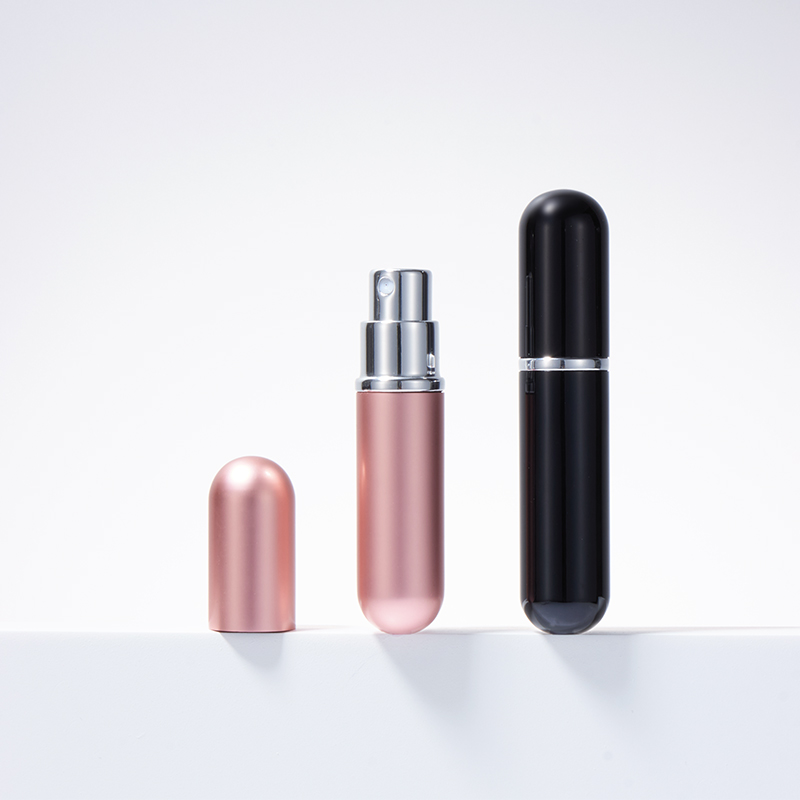
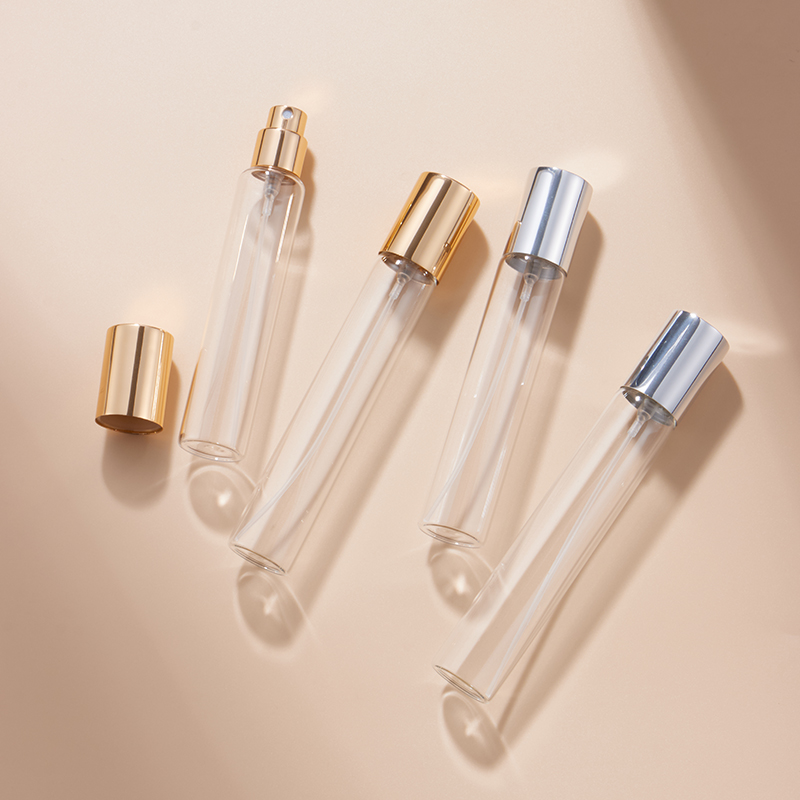
Para formatos de viaje y viales de muestra, un juego de botellas de spray de perfume de vidrio recargables en tamaños de 3, 5, 10 y 12 ml mantiene el spray terminado portátil sin transferir todo el lote. Si trabaja con botellas clásicas con cuello engarzado, una Bomba de perfume de 15 mm con tapa de aluminio Proporciona un sello mecánico firme y una niebla limpia y seca que se adapta a los perfumes a base de alcohol. Para una opción de una sola pieza sin herramientas, un Rociador de niebla de perfume recargable de aluminio y metal 13-410 Combina una carcasa de aluminio con un depósito de vidrio y un rociador fino, ideal para uso en el bolsillo y para probar su mezcla antes de ampliarla.
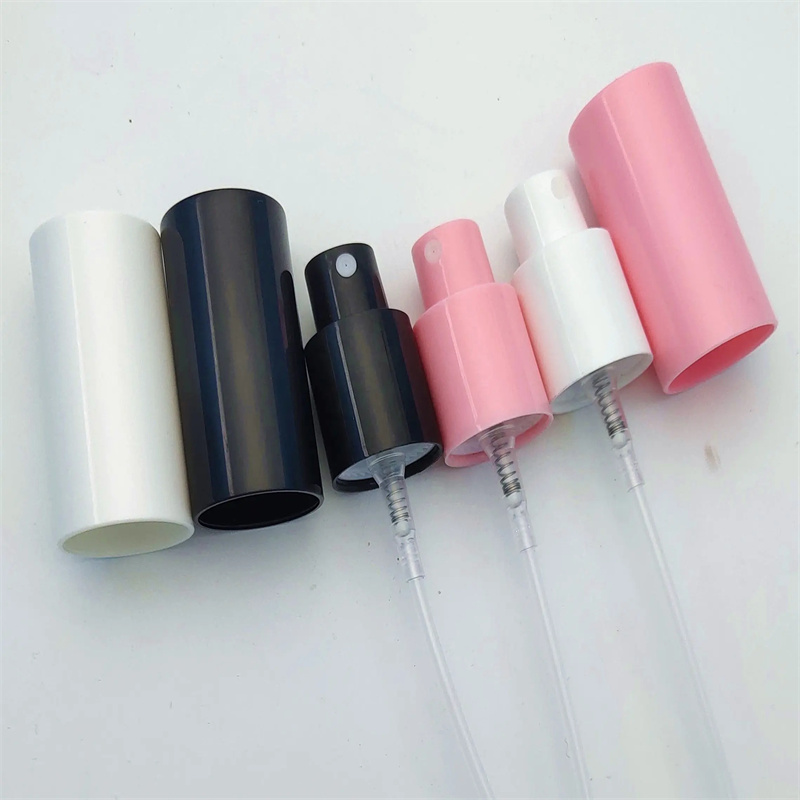 Hombre cosmético de la botella del rociador recargable de aluminio de la niebla del perfume del metal de la aduana 13/410 Zhangjiagang Haojie Packaging Technology Co., Ltd es China OEM/ODM 13/410 Metal Aluminio Recargable Perfume Mist Sprayer Botella cosmética... Ver producto →
 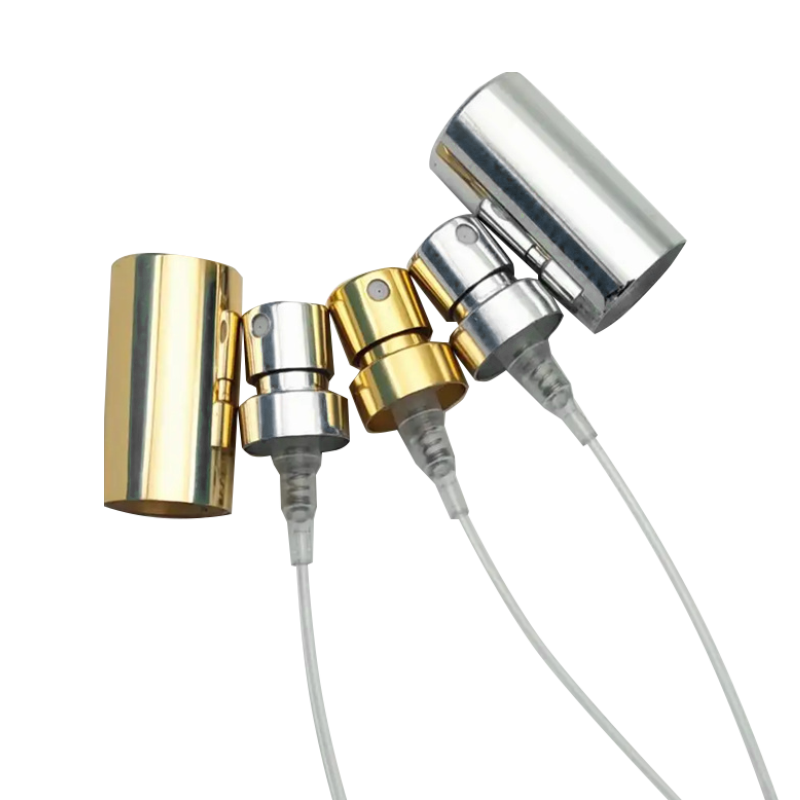 Pulverizador de bomba de engarce de perfume personalizado de 15 mm con tapa de aluminio Fabricante, empresa - Zhangjiagang Haojie Packaging Technology Co., Ltd es un fabricante de China OEM/ODM de pulverizador de bomba de engarce de perfume de 15 mm con tapa de aluminio y 15 mm... Ver producto →
 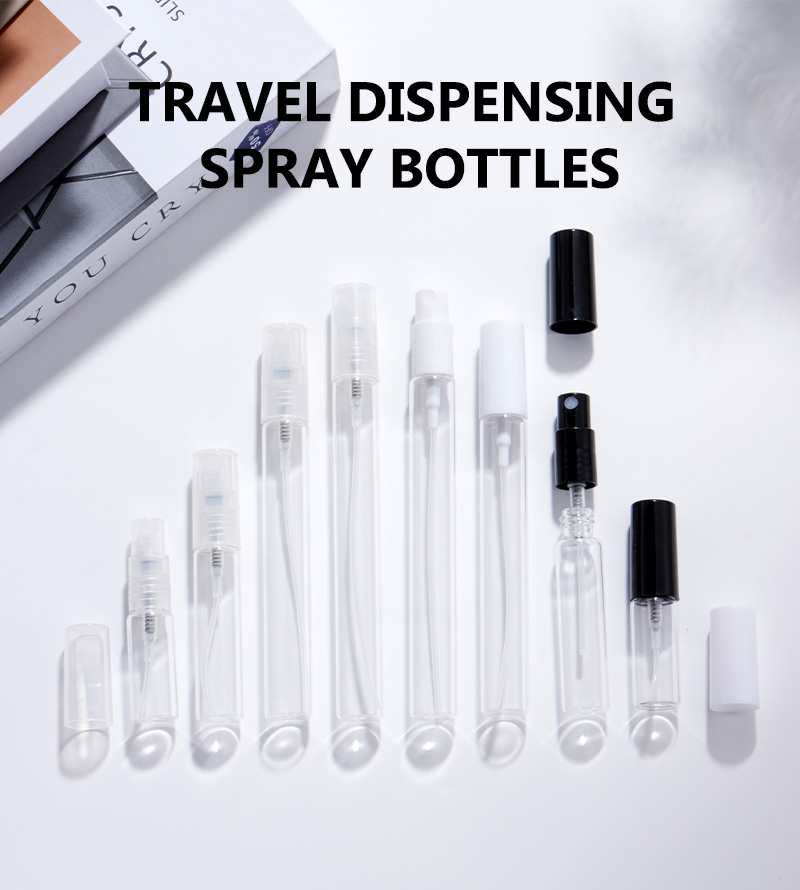 Fabricante de botella de spray de perfume de vidrio recargable personalizado de 3 ml, 5 ml, 10 ml y 12 ml, Com Zhangjiagang Haojie Packaging Technology Co., Ltd es un fabricante de botellas de spray de perfume de vidrio recargables OEM/ODM de 3 ml, 5 ml, 10 ml y 12 ml de China y... Ver producto →
 Una vez que la bomba coincide con la botella, la variable restante es ajustar la niebla misma. Vale la pena comprender la mecánica de cómo un rociador con bomba de engarzado logra una niebla uniforme antes de comprometerse con un lote grande, y saber qué efecto de rociado produce un rociador de niebla de aluminio lo ayuda a establecer expectativas para su mezcla. Si desea un mecanismo más profundo, la forma en que el cabezal de una bomba cosmética genera presión explica por qué algunas boquillas se empañan y otras gotean.
Siete errores comunes y cómo solucionarlos
La mayoría de las conversiones fallidas de perfumes no son causadas por el aceite. Siguen un patrón: el material de partida incorrecto, el recipiente incorrecto o la combinación incorrecta de bomba y botella. La siguiente tabla cubre las fallas que representan casi todas ellas.
| error | que pasa | como evitarlo |
|---|---|---|
| Usar un roll-on de aceite portador como si fuera concentrado | Líquido turbio y boquilla de niebla fina obstruida | Lea la etiqueta; filtrar; cambiar a una bomba de loción o un atomizador de orificio ancho |
| El cuello de la botella y la bomba no coinciden | Fuga o bomba que no se asienta en absoluto | Mida el diámetro del cuello; Pida la bomba y el biberón como un par a juego. |
| Llevar el contenido de aceite por encima del 30% | Turbidez, cristales, mala disolución. | Mantener el techo del PDE en aproximadamente el 25% |
| Saltarse el paso del envejecimiento | Un aroma áspero e inconexo que lucha contra sí mismo. | Edad de al menos 14 días, idealmente entre 21 y 28 días. |
| Mezclar en plástico o con agua del grifo. | Olores desagradables y crecimiento bacteriano. | Utilice únicamente vidrio y agua destilada. |
| Juzgando el olor el primer día | Un falso negativo; la mezcla sigue cambiando | Prueba después del envejecimiento y nuevamente 3 días después del embotellado. |
Almacenamiento, vida útil e higiene del recambio
Un spray de perfume con alto contenido de alcohol es naturalmente estable. Una botella bien sellada y sin abrir mantendrá su carácter durante tres a cinco años cuando se almacena en vidrio ámbar a temperatura ambiente. Una vez abierto, espere 12 a 24 meses de rendimiento confiable, siempre que la tapa esté cerrada después de cada uso y la botella permanezca alejada de la luz solar directa. El alcohol por encima del 70% aproximadamente actúa como conservante; en el momento en que agregas agua, la protección disminuye, razón por la cual la porción de agua debe permanecer por debajo del 10%.
- Mantener el frasco entre 15°C y 25°C. Los baños son un hogar pobre porque la humedad acelera la evaporación y puede hacer que la junta de la bomba se hinche.
- Guarde las botellas en posición vertical. Colocar un spray de perfume de lado puede dejar que el líquido se asiente contra la junta y se escape lentamente.
- Limpie los atomizadores recargables entre recargas: enjuague el depósito con alcohol, limpie el tubo de inmersión y séquelo al aire por completo antes de llenarlo.
- No rellenes una botella medio vacía. El oxígeno y un nuevo gradiente de alcohol alteraron la mezcla; vierta el resto en un nuevo lote en lugar de colocar capas encima.
- Etiquete cada botella con la fecha de mezcla y la proporción de aceite y alcohol. Cuando una fórmula funciona, querrás reproducirla exactamente.
Si notas que el color cambia a un ámbar opaco o que las notas altas se vuelven ácidas, el perfume se ha oxidado. Por lo general, eso significa que la botella estuvo expuesta al calor o la luz durante un período prolongado. El spray todavía se puede utilizar como refrescante para la habitación, pero ya no representará el aceite con el que empezaste.
Preguntas frecuentes
1. ¿Puedo utilizar vodka en lugar de alcohol de perfumista?
Sí, si el vodka tiene al menos 190 grados, lo que significa 95% de alcohol por volumen. El vodka estándar de 80 grados tiene aproximadamente un 60% de agua, por lo que no puede disolver completamente un aceite perfumado al 20% y la mezcla se vuelve turbia. Si no dispone de alcohol de grano de 190 grados, utilice el alcohol neutro más fuerte que pueda encontrar y reduzca el aceite al 10 % para mantener la solubilidad.
2. ¿Cuánto aceite perfumado debo añadir a una botella pulverizadora de 100 ml?
Para un Eau de Parfum al 20%, utilice 20 ml de aceite y 80 ml de alcohol. Para un Eau de Toilette al 12%, utilice 12 ml de aceite y 88 ml de alcohol. Pesar el aceite en una escala fina es más repetible que usar una pipeta, porque la mayoría de los aceites tienen una densidad entre 0,9 y 1,0 g/ml.
3. ¿Por qué mi spray se volvió turbio?
Las causas habituales son aceite portador en el material de partida, agua por encima del 10% del lote o aceite perfumado por encima del 30% del total. Primero filtra el líquido a través de papel. Si la neblina persiste, cambie a una boquilla más gruesa o una bomba de loción, que tolera las gotas de aceite mucho mejor que un inserto de niebla fina.
4. ¿Puedo agregar agua para rociar perfume?
Sí, el agua destilada entre un 2 % y un 5 % suaviza el efecto del alcohol y hace que la niebla se sienta más redonda sobre la piel. Mantenga el total por debajo del 10%, porque un mayor contenido de agua reduce la solubilidad del aceite y acorta la vida útil. El agua del grifo nunca es una buena idea; sus minerales pueden nublar el perfume y alimentar el crecimiento microbiano.
5. ¿La versión en spray durará tanto como el aceite original?
Se comportará de manera diferente. Un EDP al 20% se usa como un perfume comercial convencional: una proyección clara durante las primeras horas, luego un aroma más cercano a la piel. El aceite sin diluir dura más en un solo punto de la piel simplemente porque aplicó más masa de fragancia en un área más pequeña. El spray cambia un poco de longevidad pura por alcance y conveniencia.
6. ¿Qué bomba necesito para un frasco de perfume recargable de 10 ml?
Para botellas de vidrio de 10 ml, el estándar práctico es una bomba de tornillo 12-410 o 13-410 con una carrera de 0,10 ml. El tubo de inmersión debe ser unos 2 mm más corto que la altura de la botella. Un tubo que toque el fondo aspirará aire y omitirá las últimas pulverizaciones.
7. ¿Cuánto tiempo tengo para envejecer la mezcla?
Dos semanas es el mínimo; cuatro semanas es notablemente mejor. Los perfumistas comerciales suelen macerar durante cuatro a seis semanas antes de embotellar. Durante el envejecimiento, agite suavemente el frasco cada dos o tres días, manténgalo tapado y guárdelo a temperatura ambiente, protegido de la luz. La mezcla seguirá mejorando durante varios meses en la botella, por lo que los lotes pequeños son más fáciles de manejar y de repetir.
Nuestros productos //
Producto relacionado

- Correo electrónico: [email protected]
- Correo electrónico: +86-15962399191
- Dirección: No. 60-7, lado este de Jinzhong Road, ciudad de Jinfeng, ciudad de Zhangjiagang, ciudad de Suzhou, provincia de Jiangsu
Derecho de Autor© Zhangjiagang Haojie Packaging Technology Co., Ltd. Todos los Derechos Reservados
 Fábrica de envases cosméticos OEM/ODM
Fábrica de envases cosméticos OEM/ODM